Blog
TRAINING FOR PULL-UPS: ESSENTIAL FOR ADF AND POLICE APPLICANTS
As a new recruit aiming for a career in the Australian Defence Force (ADF) or Police, physical fitness is not just about meeting standards; it's about preparing for real-world challenges.
Training for Pull-Ups: Essential for ADF and Police Applicants
1/8/2024
0 Comments
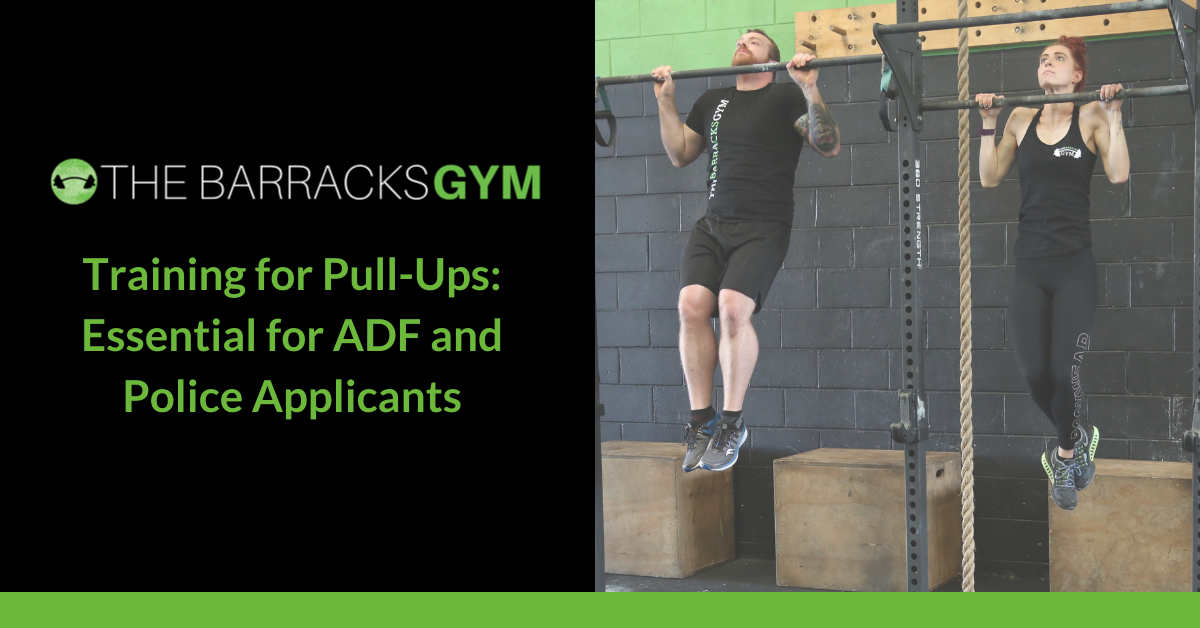
Understanding Pull-Ups and Their Variations
- Overhand Grip (Pronated Grip) : Standard pull-up form, excellent for building overall back strength.
- Underhand Grip (Supinated Grip) : Also known as chin-ups, these emphasise the biceps and offer a more natural wrist position.
- Alternate Grip : Combines elements of both overhand and underhand grips, distributing the workload across different muscle groups.
- Varying devices : It's important to vary the equipment you use. Not everything is so straight forward once you're in uniform. Try using a towel, rope or climbing grips. This enhances grip strength, crucial for tasks like rope climbing or grappling.
Real-World Relevance of Pull-Ups
Starting with Pull-Ups: Beginner Regressions
- Dead Hangs: Start out by testing your ability to hang off the bar. This will determine if you have the grip strength to be able to progress.
- Negative Pull-Ups : Start at the top position and lower yourself slowly. This helps in building strength for the full movement.
- Assisted Pull-Ups : Use resistance bands or an assisted pull-up machine to lighten the load, gradually building up your strength.
common Factors Hindering Your First Pull-Up
- Power-to-Weight Ratio : This is a balance between muscle strength and body weight. If one carries excess weight that isn't offset by upper body strength, it becomes more difficult to perform a pull-up. Achieving an optimal power-to-weight ratio is crucial for success in this exercise.
- Underdeveloped Upper Body Strength : Pull-ups require significant strength in the back, shoulders, and arms. Beginners often struggle with pull-ups due to insufficient development in these muscle groups.
- Lack of Grip Strength : A robust grip is essential for pull-ups. Weakness in the forearm and hand muscles can impede the ability to maintain a firm hold on the bar, thus affecting the overall performance of the exercise.
Safety Tips for Pull-Up Training
- Warm-Up Properly : Engage in dynamic stretching and light cardio to prepare your muscles. Tie a resistance band over the pull up bar and simulate the pull up movement by pulling the band down to your chest simulating the movement.
- Focus on Form : Avoid swinging or jerking movements. Proper form ensures maximum benefits and reduces the risk of injury. Use bands if you cannot perform one unassisted yet.
- Listen to Your Body : Pain, especially in the joints, is a sign to stop. Gradual progression is key.
- Rest and Recover : Allow adequate recovery time between sessions to prevent overtraining.
Progressing with Pull-Ups: Advanced Techniques
- Weighted Pull-Ups : Start adding weight gradually to increase resistance. This can be done using a weighted vest or a belt.
- Vary Your Grip : Regularly changing your grip width and style challenges different muscle groups and prevents plateauing. Try some towel grip pull ups.
- Increase Volume and Intensity : Gradually increase the number of repetitions or sets, or reduce rest times between sets.